
In post production I feel there are many things that can be streamlined. Especially with the Time = Money algorithm we all live by. One crucial step that is often overlooked by indie filmmakers is teaming up with a colorist prior to the shoot and establishing a LUT. Having the basic skeleton of your look in place in the form of a LUT that you can utilize on set can allow you to shoot confidently and allow you to solve many lighting problems practically on set instead of in the color suite.
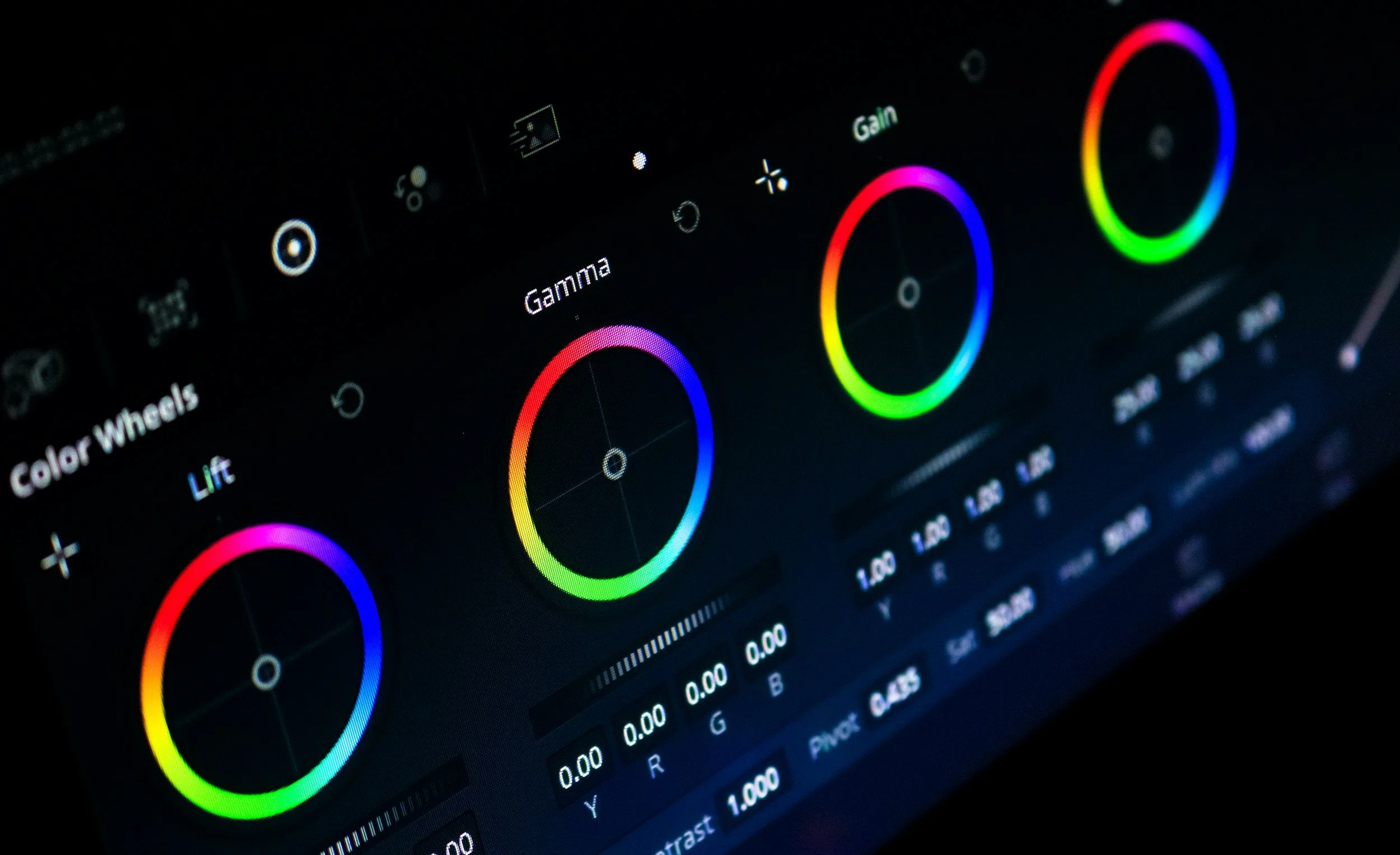
What goes into LUT creation? Firstly, there are two types of LUTs. First are Technical LUTs that are changing color spaces. The LUT that changes your footage from your camera working space to your monitoring space for example. The second kind is the Look LUT or creative LUT. This is the one most people think of when they say LUT. For shooting, dailies, and/or VFX this LUT has the luminance and hues of your desired look using a very basic toolset. Some shoots might require a couple of these. For example, one LUT for Interior scenes and a separate LUT for exteriors. When I generate creative LUTs the only toolsets I use are curves and Lift/Gamma/Gain. Other settings like windows and grain will be applied in finishing.
So what materials can you provide to your colorist that can be helpful? The best is to shoot a hair and make-up test that we can use to create the creative LUT. In lieu of this any footage from the same camera will be necessary. Next, anything that helps communicate the look you are going for. Sometimes it can be the title of a film you’re inspired by, sometimes it’s a series of stills from movies you like or want to emulate, maybe it's even classical paintings that inspire you. If we’re in the studio together crafting the LUT things are easier because we can discuss and see results in real time. If we’re doing this session remote clarity becomes key. 100 stills from 100 different movies might communicate something very different to the two of us. Simple explanations are extremely helpful. Did you pick this still because of the contrast? The way skin tone is being handled? The golden hue of the light? If you don’t point out what is resonating with you I won’t know what to utilize to guide my look crafting.
Once we’ve got a LUT it’s off to the shoot! And we can still manipulate the LUT in post. Hopefully with very minimal changes! When I worked on Babes the DP (the amazing Jeffery Kim) came in weeks prior to the shoot. He had a creative LUT that he wanted to adjust and brought it in alongside a pretty extensive hair and make-up test. We spent a few hours on a weeknight in a projection studio dialing it in. The LUT consisted of a technical transform in, some creative work, and a technical transform out. Once we got the look set we checked the LUT applied to the HMU test in the projection environment and on a traditional OLED monitor. Once Jeff was happy we made a version for him to load into the Arri camera he would be using and off he went. Months later, when we began finishing, I received turnover from editorial. Once the conform was passed to me I applied the LUT Jeff and I had made and a lot of the grading work snapped into place! This allowed for Jeff and I to spend almost all of our time grading focused on enhancing the film and all his wishlist items. There was no back and forth on setting the look because we had already done all that work prior to the shoot! If you have the ability reach out to a colorist prior to shooting. Most colorists would love to spend a few hours up front finding the look instead of multiple rounds of notes during the actual finishing session before actually beginning the grading work.
Creating a LUT

Previous
Previous
Stretching Your Post Budget
Next
Next