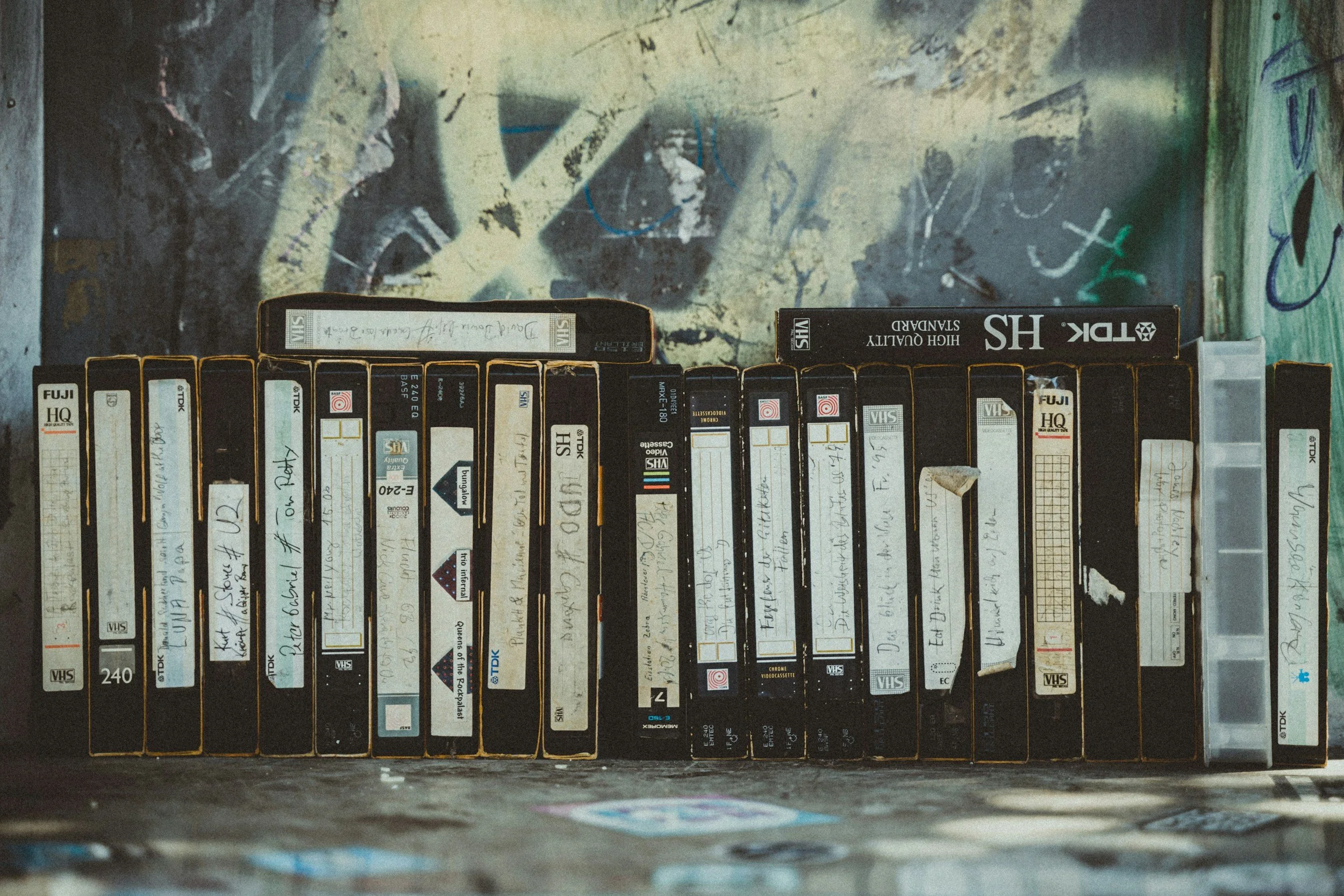
Most of us are familiar with the process at a finishing house: Footage is dropped off, graded on a computer, exported/rendered, then delivered. But until the early 2000’s there was a very different process. The one that I started as a colorist back in 2000. Telecine. There’s not a lot of telecine work out there these days. Nowadays almost all film is scanned and all work is done on the scanned files. So why the change? Many reasons. Largely, a lot less film is being shot. Also, telecine was born out of a math problem that existed when film was THE acquisition media but there needed to be a way to put it on TV.
When TV sets were in every living room, broadcasters needed a way to put 35mm film content on the air. The issue was that Film ran at 24 frames per second, but early American TV (NTSC) ran at 30 electronic frames (or 60 fields) per second. Mathematically you couldn’t map a frame-for-frame solution
The earliest solution was the Film Chain. This was a regular film projector shining straight into a video camera. This was a messy optical hack. To deal with the frame rate mismatch, engineers invented 3:2 pulldown. It’s a complex idea, but essentially, for every four film frames, five TV frames were created by scanning some frames twice. This worked, but it introduced a subtle, constant stutter in the motion, a visual artifact that haunted transfers for decades.
The first real Telecine machine was spearheaded by companies like Rank Cintel, the Flying Spot Scanner was revolutionary. It didn’t use a traditional camera. Instead, a tiny, intense beam of light rapidly scanned the film, pixel by pixel, line by line. On the other side of the film, highly sensitive tubes measured the light that passed through, instantly converting density into an electrical signal.
The Flying Spot Scanner offered incredible image quality for the time. It could capture the subtle details and wide contrast range of film better than anything before it, and Rank Cintel machines like the Ursa became the industry standard.
As electronics evolved, the CCD offered a cleaner, more stable alternative. These telecines used a fixed line of semiconductor sensors. The film moved continuously past this line, which captured one scanline of the image at a time, assembling the full picture as the film rolled through. While the Flying Spot Scanner had more of a filmic quality the CCD was more dependable and quieter.
In the telecine days, color correction happened during the transfer. This process was also a real-time process. A 22min flat of 35mm would take anywhere between 20-60min, to grade and would take no less than 22min. to be laid to tape. And if anything went wrong you had to start over. If there were technical issues there was no undo. You usually had to start over. Also, film could break, scratch, or be damaged in other ways and that was it. The film is now damaged.
This pressure-cooker environment gave rise to the art and science of digital color. The sophisticated control panels of telecines were the direct ancestors of the DaVinci Resolve and Baselight systems we use today, establishing the concepts of primary and secondary correction.
In the late 90s and early 2000s we saw the beginning of HD broadcasts and its film friendly 23.976 (and 24p) frame rates. Also, hard drive storage started to come down in price. So why transfer physical film onto video tape with all the potential issues mentioned previously when you could scan it once into an uncompressed digital file and work off of that? This is where the term DI comes from. Originally, this shift split the process into two steps. First, the film would be scanned frame for frame at the highest possible resolution. Usually to DPX sequences or TIFF sequences. Then, color would happen on a completely separate machine. This was the Digital Intermediate or DI.
The scanners used today were built on telecine technology but the word telecine has largely faded. With today's workflows we can create far more elaborate grades and looks than what was possible on the old DaVinci telecine machines. When I started (on the old DaVinci 888 telecines) we had one power window. You could use it to correct something or add a vignette and that was it. Anymore I can add as many windows as I feel is necessary without a second thought. It’s crazy to look back and see how far (and quickly) it’s all changed.