Rec709 vs P3 vs HDR
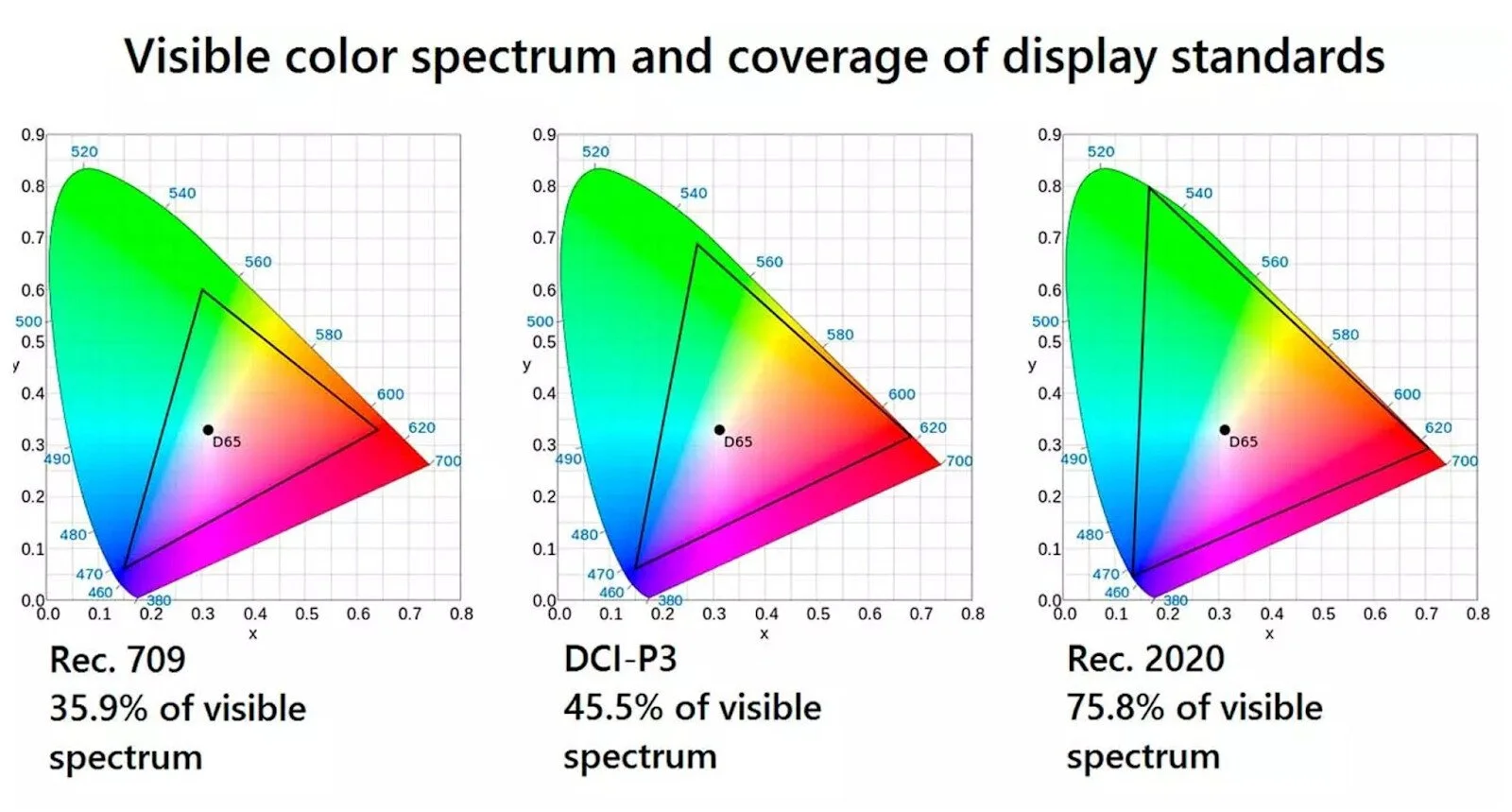
Part of managing the look of your film from a colorist's perspective is managing the complex mathematical volumes known as color spaces. In addition to managing the camera color space into our scene referred workflows we are always concerned with the color space of your deliverables. Since this is a blog and not a classroom we’ll be talking about the three main color spaces that most projects will fall into: Rec709, DCI-P3, and HDR (High Dynamic Range)
Rec709: The Workhorse
Since 1990 Rec709 has been a standardized color space for most broadcast and web content. Rec 709 was guided by the CRT (Cathode Ray Tube) monitors which defined its technical limitations. These limitations are:
Standard dynamic range. Mastered at 100 nits.
A narrow color gamut range that covers roughly 35% of the colors visible to the human eye.
Gamma is 2.4, a formula that compensates for the non-linear way humans perceive light in dark environments.
For most projects Rec.709 is the "safe" delivery format. Whether your film is viewed on a smartphone or a broadcast television, Rec.709 should be consistent across most platforms.
DCI-P3: The Cinematic Standard
P3 was originally developed once physical film started being scanned into post production workflows. It was designed to maintain the ‘feel’ of film. DCI-P3 is a significantly wider gamut than Rec709, especially in the Red and Green primaries. Today P3 is not just for cinema and film. Apple has incorporated ‘Display P3’ on most of its devices and most high-end monitors and televisions can display P3. Even with this adoption DCI-P3 still maintains a different white point and gamma (2.6 for cinema/theaters) than broadcast. Because of this a dedicated P3 pass is required in the color suite.
HDR: The Newcomer
HDR is the first significant change in display technology that I can think of. The jump from HD to 4K felt significant but was really just adding more pixels. HDR adds better pixels. Most HDR is couched inside of the Rec2020 gamut. Where Rec709 is limited to 100 nits, Rec2020 can be mastered up to 4,000nits (usually capped around 1,000nits in my experience). This allows for brilliant specular highlights and deep shadows. Because the range between these darkest shadows and brightest highlights is so extreme HDR requires at least 10bit color depth with most colorists preferring 12 to 16bits. Where the transfer function of traditional rec709 is gamma 2.4 HDR uses two new transform functions: PQ (Perceptual Quantizer) which is used for mastering and HLG (Hybrid Log-Gamma) which is used for broadcast compatibility.
A very quick summary of the three and when to utilize would be:
Rec709 - Destined for traditional broadcast, YouTube like streaming services, film festival screeners.
DCI-P3 - Theatrical Distribution. Some festival deliverables.
HDR - Delivery to most streaming services (Netflix, Amazon, Apple, etc)
This is often why one of the first questions we ask a client before starting a project is “Where is this destined for?” and we will work backwards from one of the above mastering displays.