Skin Tones
A statement I’ve heard from editors, DPs, and other colorists throughout the years is that “It’s difficult to light *insert ethnicity here*!” When I was extremely young and naive in my career I accepted this as fact since those statements were made by people who had been working in this industry many years longer than me. However, now I’m the seasoned old colorist in my circle and a few years ago I started wondering about that statement. At the time I had just taken part in a publicity interview for a project I worked on. The project in question featured a cast composed almost exclusively of black actors. In preproduction with the DP we talked extensively about the appearance and representation of darker skin tones in film so, in my interview I focused a lot on that conversation as it was central to the attitudes and looks we were applying to the piece. The article never came out. It was frustrating at the time but in reflection I think I understand a bit why. To be clear, understanding doesn’t equate support. I would have loved for that interview to come out as it touched on some things I feel are not discussed enough and that is the white skinned bias that all film and cinematography is built on and that “people of color are difficult to light” might be true but it’s true because the technology we all use was designed for caucasian skin from its inception.
I don’t necessarily think film was developed and designed with racism in the forefront of some technicians mind but it was developed, and made leaps, in times in which the primary users and developers were light skinned, white, caucasian people, largely due to racial and racist ideologies and beliefs in the culture at the time. From the mid 1950’s through to the advent of digital photography the staple for calibrating a film/exposure for skin tones was the “Shirley Card” (named after the model Shirley Page who worked for Kodak and would appear in these cards). It was photographed at the head of a roll of film to give the printer a reference for “perfect” skin tone. Here’s an example of a Kodak Shirley card:
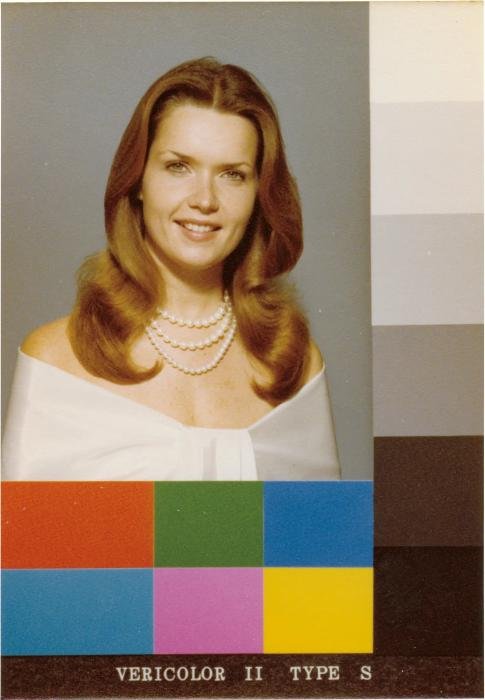
Kodak Shirley card
Shirley cards, the gold standard for calibrating skin tone and lighting, only featured caucasian models until the mid ‘70s. In 1978 Jean-Luc Godard refused to use Kodak film for a shoot in Mozambique saying that the film stock was racist. In the mid to late ‘70s photographer Jim Lyon joined Kodak and started incorporating black models into their exposure tests and over time Kodak started to make a variety of multi racial reference cards. Kodak went bankrupt in 2012 and returned as a much smaller company. They no longer produce any variation of the Shirley card and I don’t think I’ve seen one since 2012 or 2013. The last one I saw was at the head of a DCP file I had to QC for a film I was peripherally attached to and that DCP had a variation of a Shirley card at the head for the projectionist to calibrate the projector.
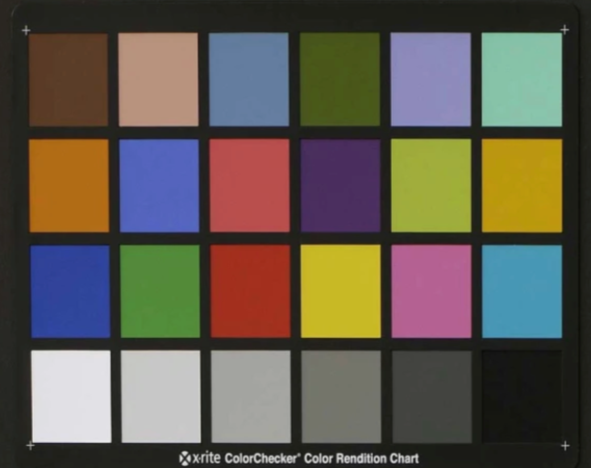
Nowadays, if I see a chart in the footage I’m grading it’s usually a macbeth chart or a gradient greyscale chart.
Macbeth chart
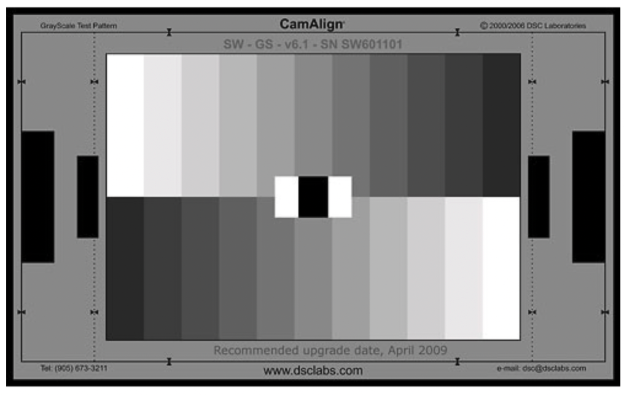
Gradient Greyscale Chart
But honestly, I don’t see too many of those either.
With the tools at our disposal nowadays it is easier to grade and print images on a case by case basis without the need for some sort of guide like the Shirley cards. In some cases (in my world it’s usually in extreme lighting scenarios or heavy VFX workflows) there is a need for some sort of lighting reference and some sort of standardized card or chart will be used but if the appearance of things like skin tone are largely determined by culture and the past biases of that culture can we have a truly neutral and accurate standard?